● Mobile · optical QC
Garment inspection on the line.Defects scored, with the recovery step attached.
The eManage Garment eQC app runs YOLOv8-seg with SAHI micro-tiling on-device, scores ASTM D5430, guides chemical stain recovery, decodes care labels, and syncs inspections to garment ERP cutting tickets even when the mill Wi-Fi is down.
Detect
SAHI 640
Sub-mm boxes
Score
ASTM 4-pt
Signed PDF + QR
Stain
SOP
Bath, temp, don’ts
Sync
Offline
ONNX on device
Garment eQC AI
Visual inspect · Northloom Textiles
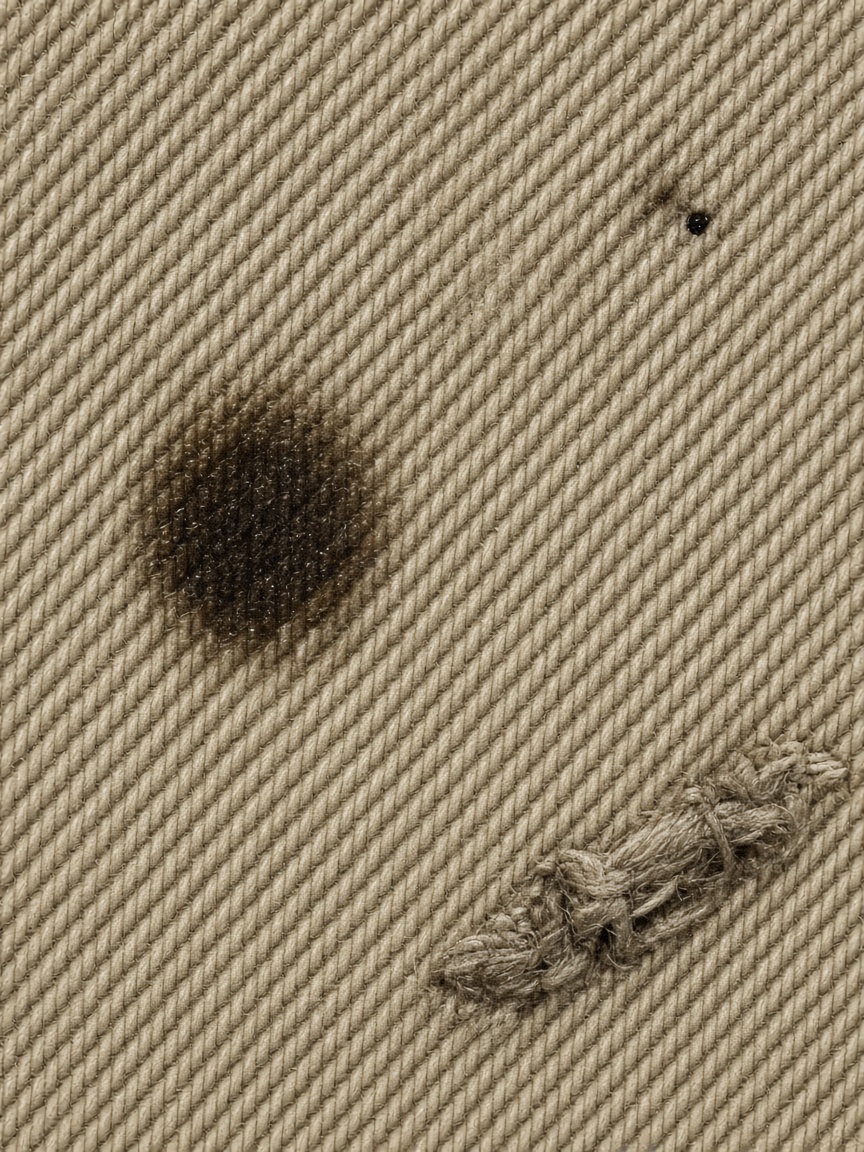 Oil stain 98.2%Pinhole 1.2 mmSlub 91.5%
Roll NL-R-4418 · cutting ticket CT-209
Cutting-room reality
The defect is on the roll. The reject is a sewn garment.
Spreading plans still assume a clean web. Inspectors on lamps miss what a phone-plus-model will box — if the model is tiled, not downsized.
Missed
Downsized models
Full-frame phone photos crush pinholes. SAHI tiles them back to 640px.
Scrap
Stain = write-off
Many lubricant marks recover if the bath is right for the fibre.
Paper
Certificates lag
4-point math on a pad is not an audit pack a buyer will take.
Under the hood
Five QC engines, one cutting ticket
01
SAHI slicing
Downscaling a 12 MP still erases 0.2 mm holes. Overlapping 640px tiles keep the detector at working resolution.
02
ASTM D5430 scorer
1 / 2 / 3 / 4 points by defect size, rolled per 100 square yards or metres. No pad arithmetic.
03
Forensic stain SOP
Cotton, blend, wool × lubricant, grease, dye bleed. Bath, dilution, and the chemistry you skip (no chlorine on protein fibres).
04
Care pictograms
ISO 3758 / ASTM D5489 symbols decoded for the spreading table, not the hang-tag designer.
05
2D FFT weave / GSM
Thread density, Plain 1/1 vs Twill 2/1 vs Satin, optical GSM where the fabric allows.
How it works
Four moves.
One write-back.
01
Capture
High-res stills, sliced into overlapping 640px tiles for YOLOv8-seg.
02
Score
Penalties per 100 square yards/metres. Grade A / commercial / reject. QR-signed PDF.
03
Recover
Fibre × contaminant → bath temperature, surfactant, and the reagents you must not use.
04
Cut around it
Defects update spreading so the table skips the zone before sewing starts.
Device
Five tools. One cutting ticket.
SAHI tiles on the phone camera. Pinholes stay boxed, not downsized away.
Garment eQC AI
Visual inspect · Northloom Textiles
Oil stain 98.2%Pinhole 1.2 mmSlub 91.5%Roll NL-R-4418 · cutting ticket CT-209
Tied to the cutting ticket
Inspections attach to production orders, roll inward GRNs, and cutting job cards. Offline packs sync when the shed Wi-Fi returns.
- ONNX Runtime / WASM on device — mill floors are not always online
- Care-label pictograms (ISO 3758 / ASTM D5489)
- Weave/GSM helpers via 2D FFT where the fabric allows
Questions plants actually ask
SAHI slices the capture into overlapping 640px tiles so the detector is not looking at a downscaled whole roll.
Defect size → 1–4 points → grade and a digitally signed PDF with QR traceability.
Substrate (cotton, blend, wool) × contaminant (oil, grease, dye bleed) yields bath, dilution, and prohibited reagents — e.g. no chlorine on protein fibres.
Models run on-device. Inspections store locally and sync to eManage when the network returns.
Bi-directional with garment production orders, roll GRNs, and cutting masters so spreaders skip flagged metres.
Next