
● Telemetry · Industry 4.0
Machine data that stays on the plant LAN.Sub-50 ms loops. Seventy-two hours if the WAN drops.
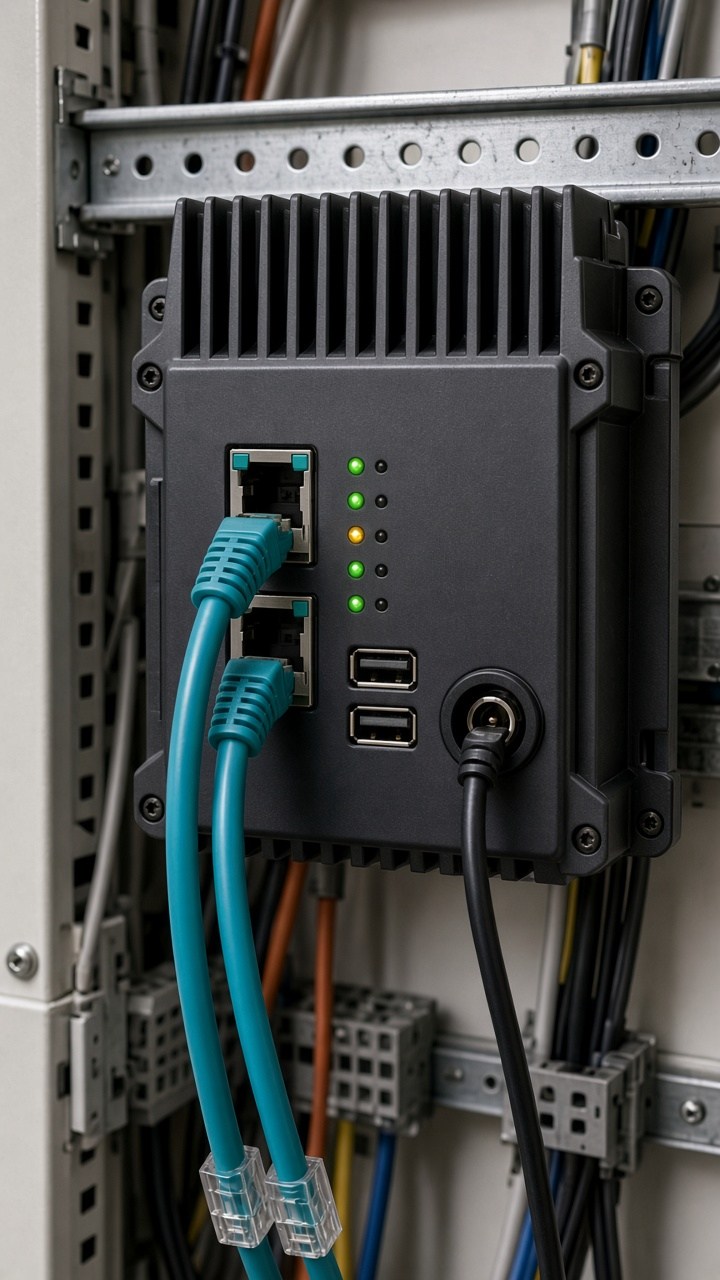
eManage textile IIoT edge processes machine telemetry locally in 10–50ms, speaks OPC UA and MQTT, retrofits Modbus/RS-485 frames, and buffers 24–72 hours so OEE and stop relays survive internet outages before syncing to ERP.
Loop
<50 ms
Stop & tension relays
Buffer
72 h
Circular, zero loss
Legacy
Modbus / 485
Frames without Ethernet
WAN
−99.8%
Edge rollups, not raw
Why edge
Cloud ingestion is too slow and too expensive for a shed.
Hundreds of spindles at 100ms, looms above 1,000 picks/min. A 200–500ms cloud hop cannot hold a stop relay. An outage blanks the dashboard.
200–500ms
Cloud RTT
Too sluggish for tension and halt decisions on the frame.
120k/min
Raw points
200 spindles × 10 readings/s before anyone aggregates.
WAN down
Blind mill
Cloud-only stacks go dark the moment the fibre link drops.
On the box
Four monitoring lines. One edge write-back.
Same gateway, same 72-hour buffer. Knit cells, looms, sewing lines, and machining centres each have their own console on the same edge path.
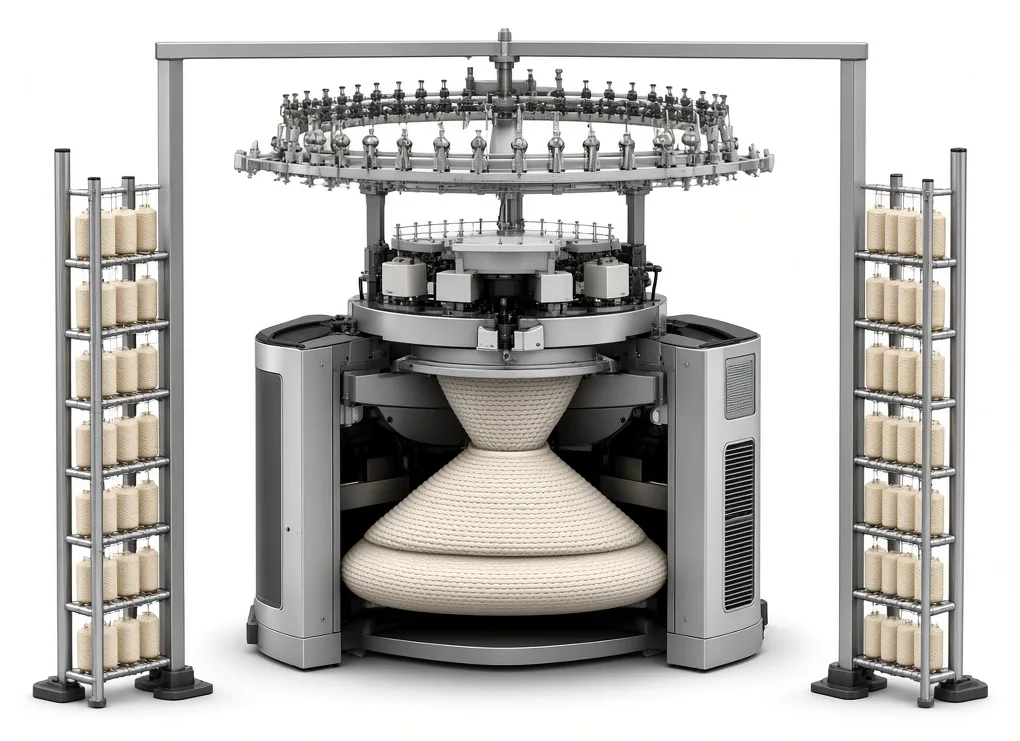
Circular & flat knit
Knitting Monitoring AI
Pick rate, yarn-break, and stop reasons leave the circular-knit or flat-knit cell in 10–50 ms. The edge box writes the live job card — not a clipboard at shift end.
- Yarn-break and needle-line stops
- Pick / course rate vs the ticket
- Store-and-forward if WAN dies
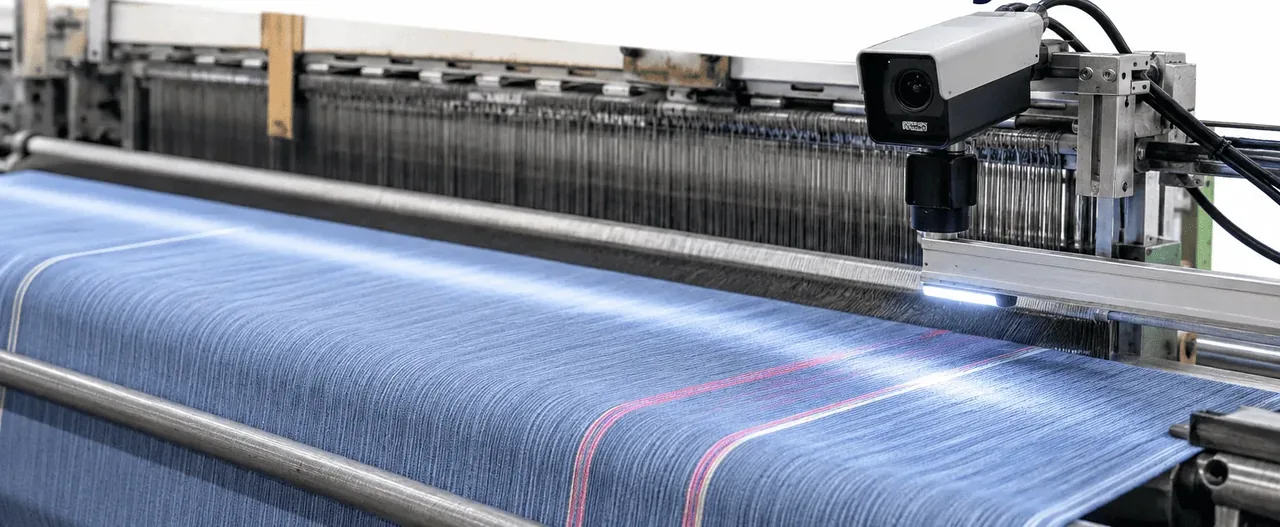
Looms & weaving sheds
Weaving Monitoring AI
Loom counters and stop signals leave every loom in 10–50 ms. Opening and closing readings, net metres, and weaver averages fill the Day and Night shift report — no walk round the shed with a pen.
- Net metres and kg per loom, per shift
- Warp, weft, beam, and fitter stops with minutes
- Production, finishing, and fabric stock in the ERP
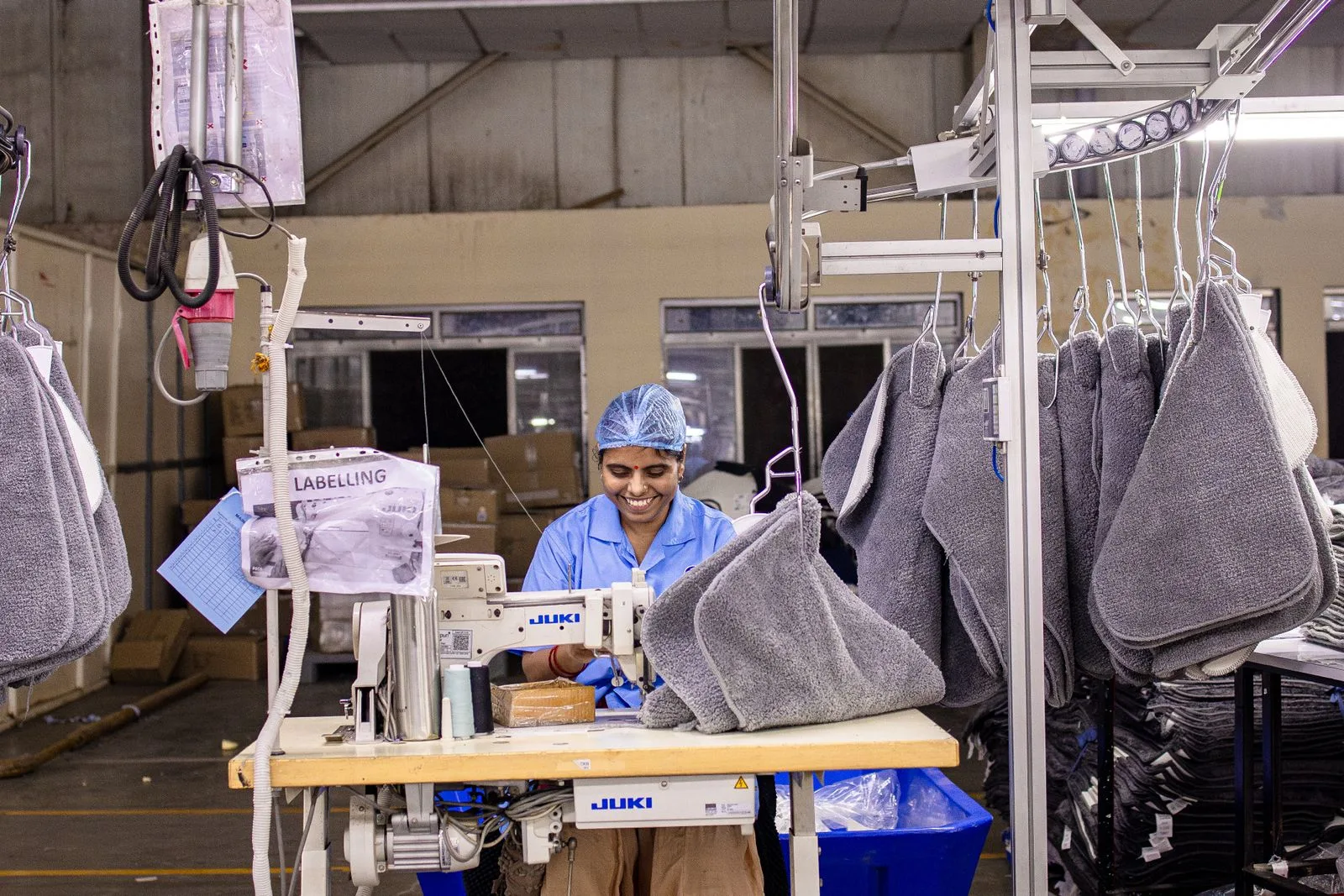
Garment sewing lines
Sewing Monitoring AI
Servo-motor taps and clamp-on sensors stream SPM, needle time, and idle reasons from every station. The hour-by-hour board and the bundle card update while the style is still on the line.
- SPM and needle time per station
- Bottleneck and WIP flagged live
- Piece-rate and DHU on the bundle card
Machining centres
VMC / HMC / CNC Monitoring AI
Cycle time, axis load, idle, and spindle hours sync to the same job card as the rest of the plant. Device tiles, gauges, and last-known values share one shop console.
- Cycle, idle, and micro-stops
- Tool-load and spindle hours
- Job-card write-back, not a second HMI
Protocol matrix
What runs at each hop
Bandwidth, latency, and encryption change from the motor to the HO ledger. The gateway is the translator, not a cloud pipe.
MQTT
Edge to plant / cloud
Publish/subscribe with TLS 1.3. Spindle speeds, picks, and power with QoS 0–2. Typical loop 10–50 ms.
OPC UA
Machine to gateway
IEC 62541 on Rieter, Picanol, Murata, Toyota. Information models, X.509, AES-256. Sub-10 ms polling.
Modbus
Legacy frames & meters
TCP/RTU on older spinning, carding, and energy meters. Isolated VLAN — never exposed to the office LAN.
HTTPS
ERP & BI sync
Hourly tallies, tickets, and inventory into eManage. Batch, not a tension loop.
How it works
Four moves.
One write-back.
01
Sense
Current transducers, pick pulses, inverter frequencies — including RS-485 breakouts on machines that never had a port.
02
Filter on the box
Local averages, alarms, and OEE. 90–98% of raw volume never leaves the shed.
03
Act
Relays and operator lights fire from the gateway, not from a region.
04
Forward
When WAN returns, alarms and KPI rollups go first; raw streams follow. ERP catches up in priority order.
Four-tier edge
Where the millisecond lives
T1
Machine
Pick pulse, inverter, RS-485 on the frame.
T2
Cell gateway
OPC UA / MQTT, <50ms loop, 72h buffer.
T3
Plant
Shed HMI, line rollups, local alarms.
T4
ERP
eManage sync — KPIs first, raw later.
The same numbers payroll uses
Shift efficiency and stop reasons land on job cards. Piece-rate and OEE stop arguing because they are no longer two notebooks.
- Rieter, LMW, Schlafhorst, Picanol, Sulzer — mixed in one model
- AES-256 at rest, mTLS 1.3 with device certs in flight
- VLAN isolation, locked USB, locked enclosure
Four tiers
Tier 1 — machine
Sensors and serial on the frame. Spindle FFT, loom pick, warp loadcell, IO-Link / 4–20 mA / RS-485.
Tier 2 — cell gateway
Ruggedized OPC UA / MQTT box, 72-hour circular buffer, local departmental broker.
Tier 3 — plant
On-prem GPU/NPU: yarn-break prediction, shed OEE, local HMI.
Tier 4 — ERP / HO
eManage sync, multi-plant rollup, long-term telemetry lake.
Questions plants actually ask
Latency and cost. Relays need 10–50ms. Raw spindle streams also burn ingress. Edge filters to machine averages and department OEE first.
Local alarms and models keep running. A 24–72h circular buffer holds telemetry. On reconnect, alarms sync first, then raw history.
Typically 90–98%. A 200-spindle example drops ~120,000 points/min to a few hundred machine averages and OEE metrics.
RS-485, Modbus RTU/TCP, and analog breakouts convert to OPC UA/MQTT so old and new machines share the same dashboards.
Physical locks, industrial VLANs, disabled USB, AES-256 at rest, mutual TLS 1.3 with per-device certificates.
Next