● Vision · textile quality
Roll grading at production speed.ASTM D5430, up to 30 metres a minute.
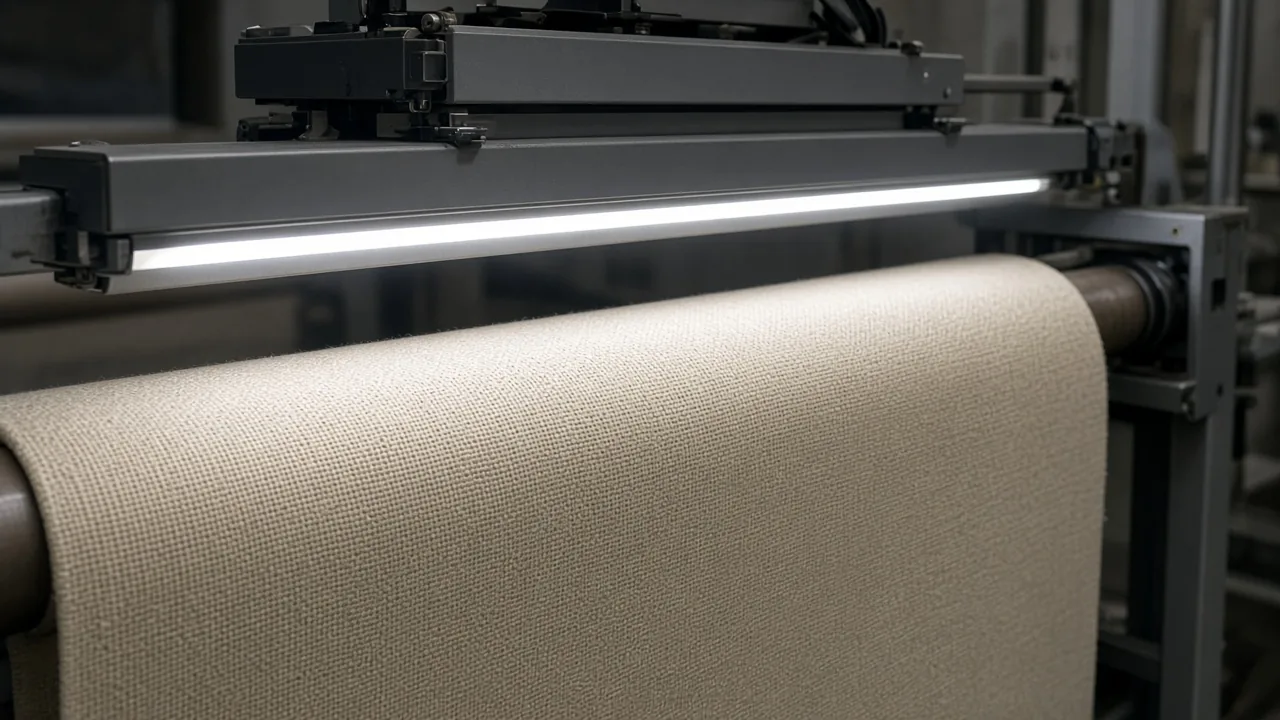
eManage AI Vision Fabric Inspection uses line-scan cameras up to 16K with multi-angle lighting to catch holes, slubs, stains, reed marks, dropped stitches, and shade drift at up to 30 m/min, then attaches a meter-wise defect map to the ERP Roll ID with automated 4-point or 10-point grading.
Scanner
16K tri-linear
CMOS colour array
Pitch
<0.06 mm/px
Nyquist sampled
Feed
30 m/min
Zero motion blur
Grade
ASTM D5430
4-pt / 10-pt auto
The inspection gap
The human eye fails at twenty metres a minute.
Finished rolls carry weeks of spinning, weaving, and finishing. Most mills still put a tired checker under a 4-point lamp.
60–70%
Manual catch rate
Drops after the first 90 minutes as blink-rate blindness sets in.
15–25 m/min
Web speed
Faster than an inspector can track a 2 mm broken pick on a 2 m web.
2–4%
Value lost
Downgrades and buyer disputes from defects that left the mill unseen.
93–96%
eManage catch
Continuous coverage, encoder coordinates, ERP roll map. No shift fatigue.
Lamp vs line-scan
| Capability | Manual 4-point | eManage vision |
|---|---|---|
| Accuracy | 60–70%, degrades after 90 min | 93–96% sustained across shifts |
| Web speed | 10–15 m/min to track | Full line speed to 30+ m/min |
| Coordinates | Paper, approximate metres | Encoder X/Y on the Roll ID |
| Shade | Subjective under mixed lamps | Calibrated ΔE |
| Disputes | Word against word | PDF map + image log |
From the floor
What the camera actually sees
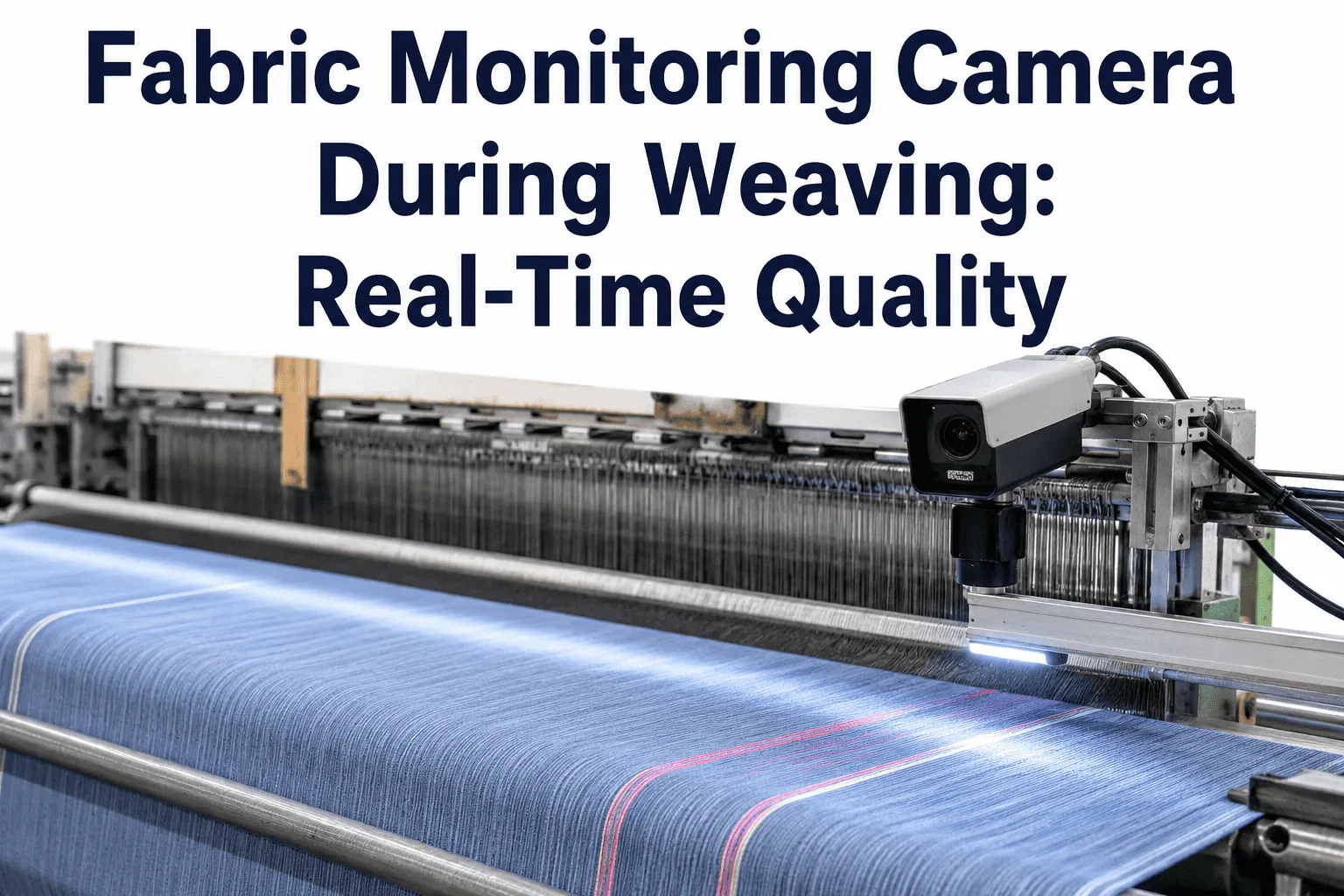
Inline loom inspection
Warp and weft on airjet, rapier, and projectile looms before the cloth is rolled.
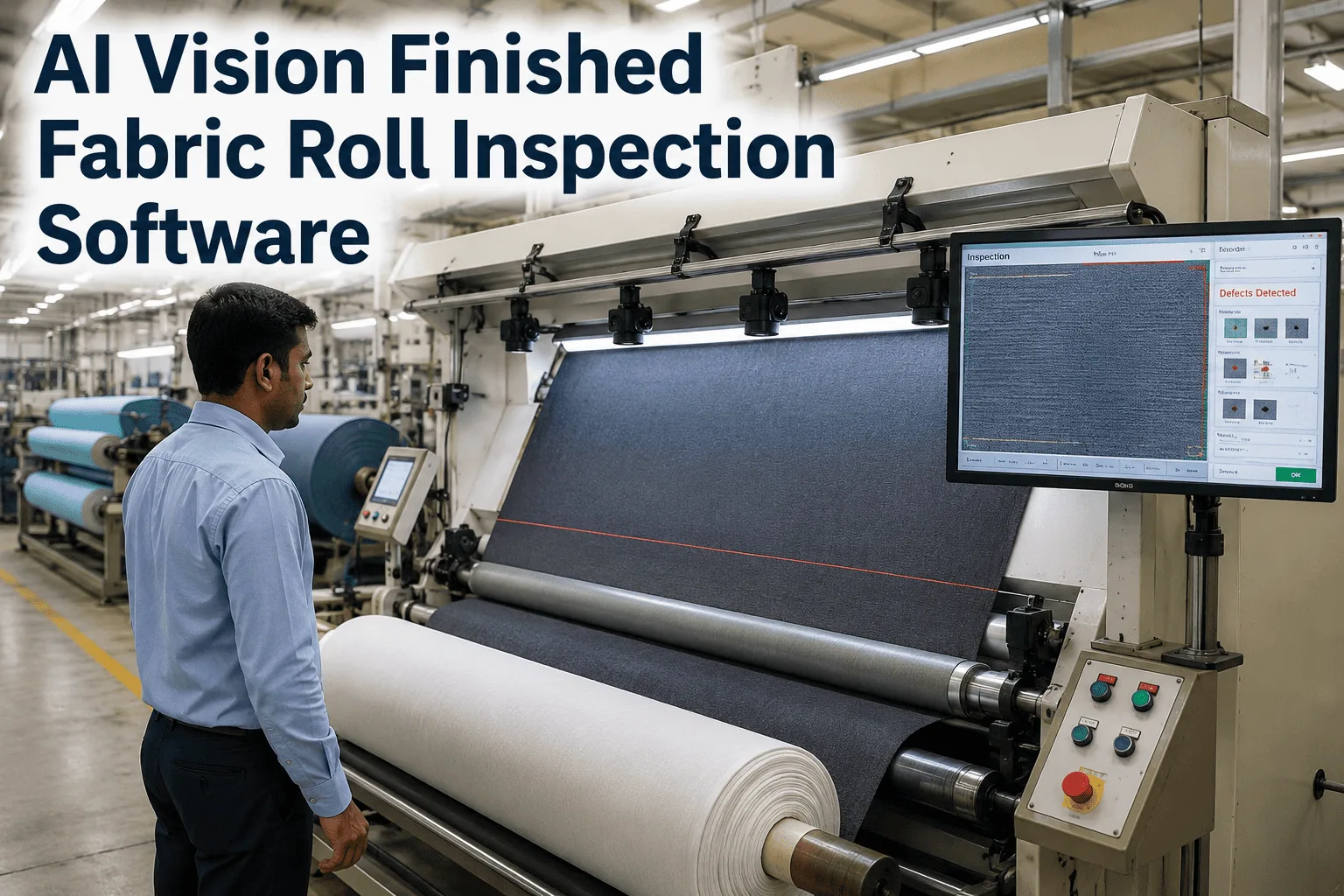
Finished-roll stand
Batching-frame inspection with automatic 4-point grading and barcode tags.
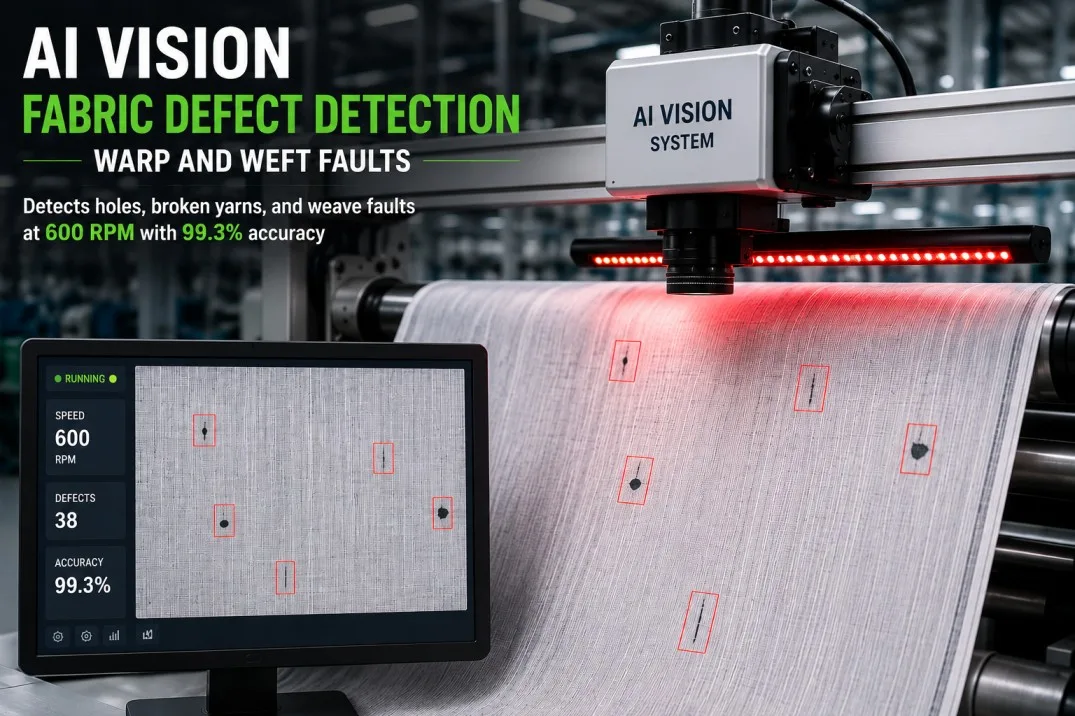
Warp & weft classification
Snags, broken picks, oil stains, and hole clusters with encoder coordinates.
Optical physics
Lighting geometry for textile surfaces
A single overhead lamp cannot catch both shade drift and surface relief. The tunnel is lit for the defect class, not for a photograph.
15°
Low-angle raking
10–30° light casts relief on reed marks, slubs, snarls, and missing picks.
Dome
Diffuse / cloud
Shadow-free fill for shade banding, weft bars, and chemical stains.
Thru
Transmitted backlight
LED bank behind the web for pinholes, thin spots, and missing yarns.
Strobe
Polarised multi-angle
Sequenced strobes separate fibre glint from true substrate faults on technical goods.
How it works
Four moves.
One write-back.
01
Light the web
Wovens get low-angle raking (15–20°) for reed marks and slubs. Knits get diffuse dome plus 30–45° for dropped stitches without loop noise.
02
Scan every millimetre
8K/16K CoaXPress line-scan, encoder-locked. Wide goods tile with 2–5% overlap so there is no blind stripe.
03
Classify and score
Stain, pinhole, slub, shade. Penalty points roll up to First / Commercial / Reject on ASTM D5430.
04
Write the roll
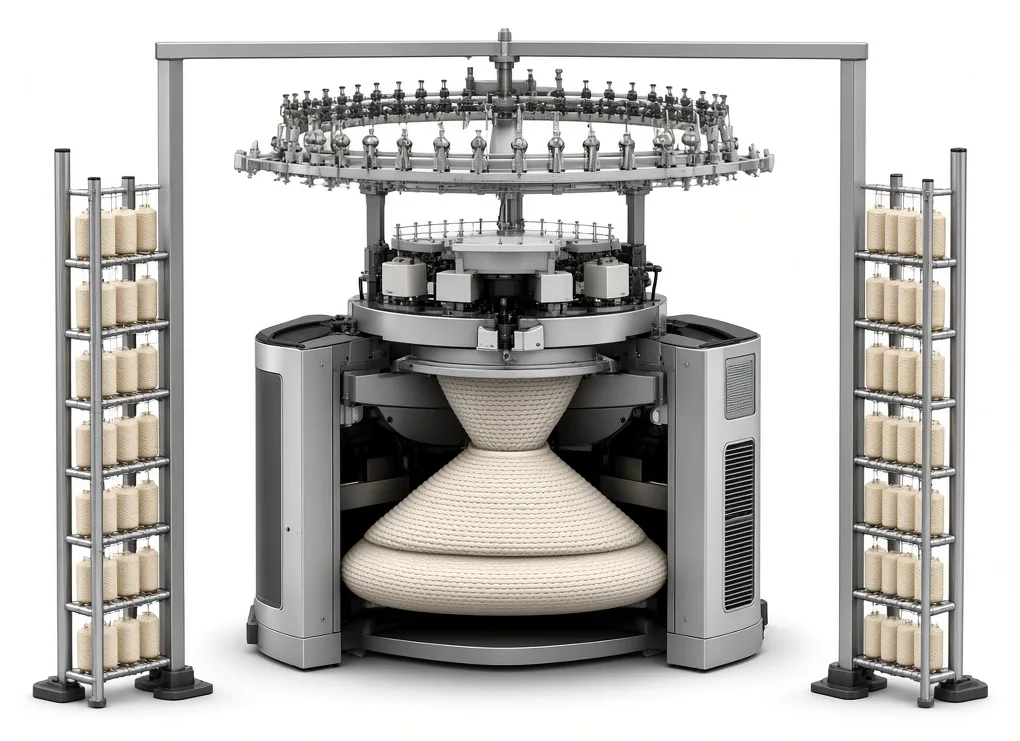
Meter-wise coordinates attach to the eManage Roll ID. Knitting rings can halt the cylinder on a repeating needle line.
Nyquist sizer
Line rate & optics
Five samples across the smallest defect. Adjust web width, defect size, and speed — the box tells you pitch, camera count, and line frequency.
Pitch
0.200 mm/px
Cameras (8K tiles)
2
Line rate
2,083 Hz
The map is the roll master
Cutting rooms consume the defect file. Buyers get a PDF with images. The mill stops arguing about a stain that was or was not there.
- Inward and outward inspection on the same Roll ID
- Halt relay into circular knitting with operator and machine logged
- Exportable audit pack for buyer disputes
Optics, not slogans
≤1.8 m goods
Single 16K or dual 8K over CoaXPress (up to 12.5 Gbps).
>3 m technical / home
Synchronised multi-camera tiling, encoder pulse trigger.
Nyquist
Size line rate and lens from defect size, web width, and speed — calculator on this page.
Questions plants actually ask
Human catch rates sit around 60–70% and fall after the first 90 minutes. eManage holds 93–95% at up to 30 m/min because the camera does not blink and every millimetre is sampled.
Yes, with different light. Wovens use raking light for grid defects. Knits use diffuse plus directional light so normal loop texture is not a false positive.
Each classified defect gets ASTM D5430 (or 10-point) penalties. The roll grade and meter map store on the ERP Roll ID.
Yes. Repeating needle lines, dropped stitches, or elastane breaks can fire a halt relay. Stop reason, operator, and roll ID write to eManage.
Up to 1.8 m: 16K or dual 8K CoaXPress. Over 3 m: tiled cameras with 2–5% overlap, hardware encoder trigger.
Next